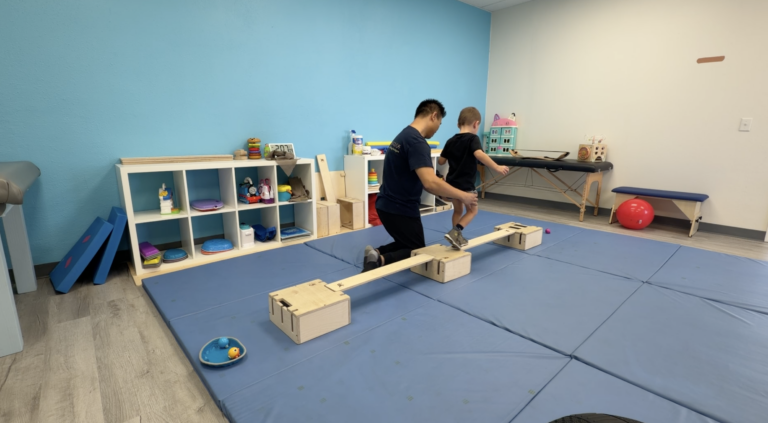
Dynamic Movement Intervention (DMI)
Active movement and postural control, with goals connected to developmental milestones.
Learn about Dynamic Movement Intervention (DMI) →
Therapies
Explore care for movement, play, mealtimes and everyday activities. Start with the activity that matters to your family; you can discuss which service is appropriate with the clinic.
Request an evaluationOur specialties
Explore how we support movement, sensory experiences and mealtimes. Your child’s evaluation helps connect the approach with your family’s goals.
Active movement and postural control, with goals connected to developmental milestones.
Learn about Dynamic Movement Intervention (DMI) →
Understanding sensory experiences and supporting play, movement and everyday participation.
Learn about Sensory Integration →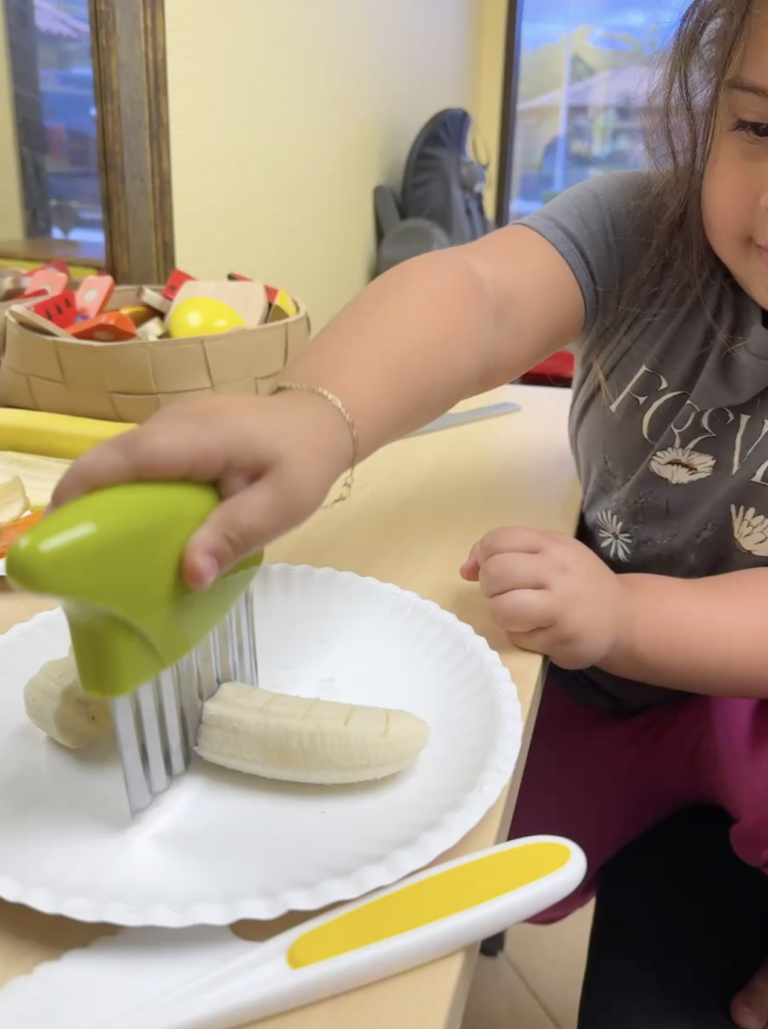
Purposeful food exploration and eating skills, guided by your child’s readiness.
Learn about SOS Approach to Feeding →Movement, mobility, balance, and gross motor development.
Explore this servicePlay, self-care, fine motor skills, and daily participation.
Explore this serviceSupport for eating, drinking, food exploration, and swallowing concerns.
Explore this serviceEarly development, play, interaction, and everyday routines.
Explore this serviceSensory experiences, body awareness, and participation in daily activities.
Explore this serviceA sensory room with light, sound, and tactile experiences.
Explore this serviceSensory movement activities for active play, regulation and everyday participation. Explore SDP funding under service code 331.
Explore the AcademyFamilies can contact us about delayed movement milestones, sensory differences, feeding challenges or difficulty participating in daily routines. These concerns can occur with or without a diagnosis. Our specialty pages explain examples of developmental concerns and conditions that may be relevant to each approach.
Your child's abilities, interests, medical history and family priorities guide the evaluation and treatment plan. You do not need to know which approach fits before contacting us.
We may offer reflex integration alongside other therapies when assessment connects a movement pattern with a difficulty in everyday activities. Goals and progress focus on useful skills and participation, rather than changing a reflex finding alone.
Read about sensory integration and our broader therapy planWe build on your child’s interests while working toward the goals set at their evaluation. The therapist considers sensory needs at each visit and adjusts the activities to how your child is doing that day.
Goals may focus on participating more in dressing and daily living routines.
Play offers opportunities to work on movement, coordination and participation in the playroom.
Feeding activities may help a child engage with foods they tend to avoid, according to their individual assessment and goals.
Our sensory gym, multi-sensory room, daily living and feeding room, physical therapy gym and multimedia area give us different ways to connect activities with your child’s goals.
Our equipment includes swings, barrels, ball pits, sensory toys and bins, weighted vests and whole body vibration equipment. The therapist selects tools according to your child’s needs and the activity being addressed. These are options within care, rather than a checklist for every session.
The multi-sensory room offers light, sound and tactile experiences, including visual media, fiber optics and a water column. We adapt the sensory environment to your child’s responses and goals. In the multimedia activity area, motion-sensor games are incorporated into activities that work on coordination.

Tell us what your child enjoys, what seems difficult and what you would like to work toward. Concerns can overlap across services, so you do not need to sort them into a therapy category before contacting us.
Getting startedDiscuss appointment availability, any information needed, and your insurance or payment questions with the clinic.
Insurance and paymentCall (909) 258-9292. For client portal access, use the sign-in link below.
Visit the clinic portal