
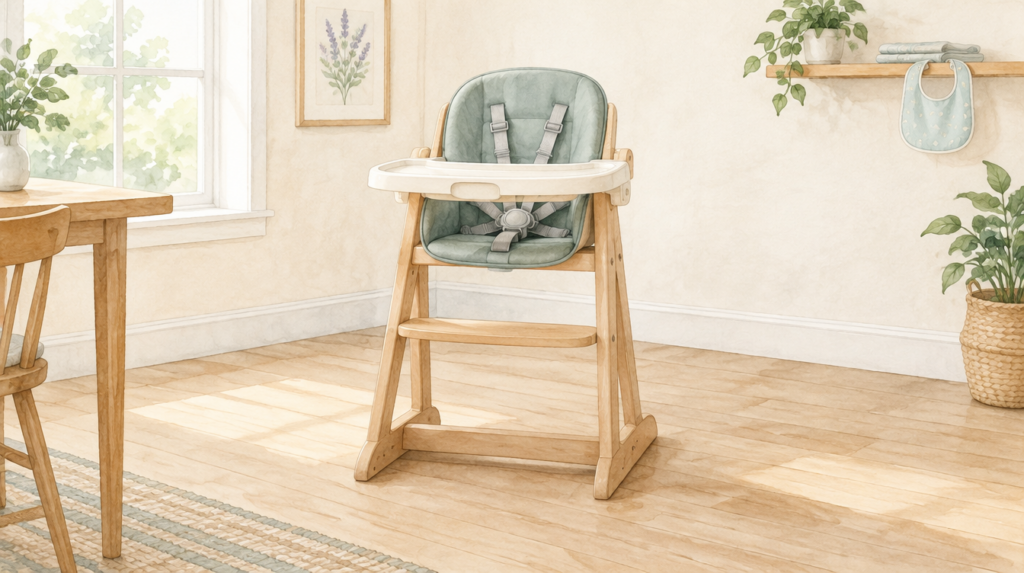
The food is ready, your baby is reaching for the spoon and you are trying to remember where the clean bib went. Before the first bite, take a moment to check the seat and the space around it. A predictable setup can make it easier to stay close and pay attention during a busy family meal.
For babies and young toddlers who are eating solid foods, the chair is part of the feeding routine. It needs to suit your child’s development and be used according to its instructions. These three checks can help you look beyond the tray and think about the whole mealtime setup.
1. Check the chair itself
Find the brand and model information, especially for a secondhand chair. Keep the instructions available and check for missing parts, damage and current safety notices. A tray is not a substitute for the chair’s safety straps.
A current example matters: on October 15, 2026, the U.S. Consumer Product Safety Commission warned families to stop using bblüv Grow high chairs because of fall and entrapment hazards. CPSC directs consumers to dispose of these chairs and not sell or give them away. If you have that product, follow the official notice rather than trying to repair it yourself.
For other chairs, the American Academy of Pediatrics recommends checking stability, locking folding chairs when set up and using the safety straps, including the crotch strap, every time. Keep the chair away from surfaces your child could push against and tip it over.
2. Check your child’s position and readiness
The CDC describes readiness for solid foods at about 6 months, including sitting alone or with support and controlling the head and neck. Those are parts of readiness, not the only signs to consider. A birthday or a chair’s age label alone does not answer every feeding question.
Use the seat, harness and any adjustable parts exactly as the manufacturer directs for your child’s age, size and abilities. If your baby cannot maintain a comfortable upright position, discuss the setup with their pediatrician or feeding therapist before continuing. Avoid improvising support with loose cushions or unapproved attachments.
Illustrative example: Before bringing the food over, check that the chair is fully set up and the straps are ready. Once your child is seated, adjust the harness according to the instructions rather than relying on the tray to hold them in place.
3. Set yourself up to stay present
Wash your child’s hands, bring the food and needed utensils within your reach, and put your phone aside. Stay with your child throughout the meal. Never leave a child alone in the chair or allow standing or climbing.
The CDC’s mealtime guidance recommends limiting distractions, facing your child toward family members and watching for hunger and fullness cues. Mealtime participation includes exploring and learning; it does not require finishing everything on the plate.
Optional tools for trying this at home
A washable bib and a clean cloth can make the preparation and cleanup routine simpler. Use what you already own, checking the bib’s fit and care instructions. Extra purchases are optional; accessories do not replace an appropriate seat, its restraints or adult supervision.
If you have questions about seating, feeding skills or joining family meals, Sensory Bridge Pediatric Therapy can discuss getting started. Call (909) 258-9292.