
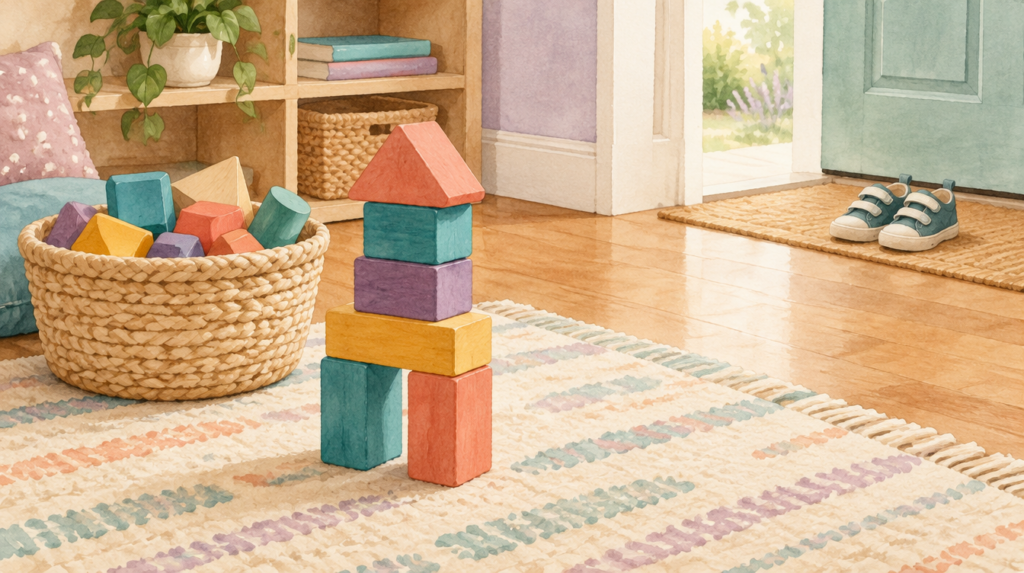
You sit beside your toddler with a basket of blocks, ready to build a house. They want to put the blocks in a cup and tip them out again. Should you show them a different game, ask more questions or keep watching?
For toddlers around ages 2–3, joining their play can start with noticing what already interests them. You do not need to turn every moment into a lesson. A familiar game can offer a manageable way to spend time together between meals, errands and the rest of family life.
1. Watch first, then join the game they chose
Settle nearby in a comfortable position and give your child a moment to show you what they are doing. Notice whether they are stacking, carrying, pretending or exploring how something moves. The American Academy of Pediatrics encourages following a toddler’s interests and offering simple, safe materials.
Illustrative example: If your child is putting large blocks into a wide bowl, place another bowl beside you. Try the same action with your own block. A short comment such as “Your bowl is full” can acknowledge the game without requiring an answer. Wait to see whether they invite you to add a block or prefer you to play alongside them.
2. Add one small idea and leave room for their response
Once you understand the game, offer a small variation. A block might become a pretend phone, or a toy animal might need somewhere to sleep. AAP’s pretend-play guidance describes using familiar objects in imaginative ways while letting children guide the story.
Illustrative example: Your child builds a short wall. You place a toy animal nearby and say, “I wonder where it could go.” If they move it inside, follow that idea. If they keep stacking, you can return to stacking too. There is no need to insist on a story, take their materials or finish the structure for them.
The CDC lists using objects to pretend among its 30-month milestones. That is developmental context, not a test to repeat during play. Share concerns about development or lost skills with your child’s pediatrician.
3. Make space for different ways to participate
Your child might hand you an object, copy an action, make a sound or simply stay nearby. Notice the invitation they offer. You can make the setup easier to reach, move a noisy toy aside or offer fewer materials if the space feels crowded. Keep the play area clear of choking hazards and supervise with age-appropriate items.
Choose a small opportunity that fits your day, such as building together while dinner cools. Pause when either of you needs a break. You can enjoy shared play without producing a finished project.
Optional tools for trying this at home
Here are a few optional tools for trying these activities at home. You can also use what you already have. If you purchase through these links, Sensory Bridge may receive a small commission at no additional cost to you. As an Amazon Associate I earn from qualifying purchases.
LEGO DUPLO Brick Box 10913 is labeled by LEGO for ages 18 months and up. Its larger bricks and figures offer materials for building alongside one another or making a simple pretend scene. Follow the set’s age and use instructions. Existing age-appropriate blocks, sturdy cups or a familiar toy can serve the same play invitation; buying a set is optional.
If joining everyday play feels difficult for your family, Sensory Bridge Pediatric Therapy can discuss your questions about participation. Call (909) 258-9292 for help getting started.