
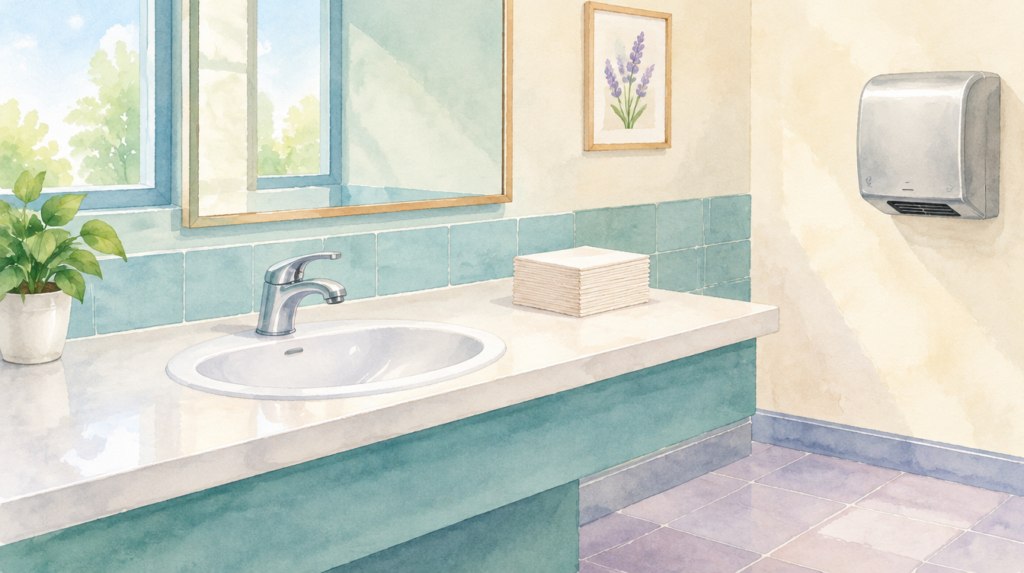
Your child needs the bathroom during a family outing, but stops at the doorway when a hand dryer starts. A quick routine suddenly becomes the hardest part of the trip. For preschool and early elementary children, a little preparation and a quieter way to dry hands can make the next visit more manageable.
Children can find sudden sounds upsetting even when other people barely notice them. Disliking a dryer does not, by itself, identify a diagnosis. Start by noticing the difficult part: the dryer, an unexpected flush, a busy room, or not knowing what will happen next.
1. Make the sequence predictable
Before entering, explain the plan in a few familiar words: “Toilet, wash, towel, then back to our outing.” If you know a noisy flush is coming, tell your child beforehand. The Dudley Group NHS guidance on sound sensitivity recommends reassurance, explaining sounds and giving warning when possible.
Illustrative example: At home, draw three simple pictures showing the toilet, sink and towel. Let your child point to each picture as you talk through the routine. This is a way to explain the steps, not a test or a promise that the next bathroom will feel easy.
When available, look for a quieter family or single-occupancy restroom. Check where the dryer is before choosing a sink. Leave enough time that your child does not have to manage an unfamiliar bathroom while everyone is rushing.
2. Offer a practical choice
Carry a few clean paper towels in a clean, dry pouch. Your child can wash and dry their hands without using the dryer. Whittington Health’s sensory support guidance specifically suggests carrying paper towels when hand dryers are distressing.
Illustrative example: Before washing, offer, “Would you like to hold the towel, or should I hold it?” A small choice can keep the focus on finishing the routine. You cannot control whether someone else starts a dryer, so avoid promising that the room will stay quiet.
Stay close, acknowledge the discomfort and keep your words brief. A necessary bathroom visit does not need to become a lesson in tolerating the dryer. Do not make using it a condition for leaving or returning to the outing.
3. Share the plan with other caregivers
Tell school staff, relatives or other caregivers which sound is difficult and what has helped. A shared phrase such as “We have your towel” can make the routine more familiar. Notice whether your child is managing the visit more comfortably, rather than measuring success by whether they use the dryer.
If everyday sounds feel painful, or sound distress is regularly preventing important activities, speak with your child’s pediatrician about assessment, including hearing evaluation when appropriate. The NHS guidance on noise sensitivity also advises against wearing earplugs or earmuffs all the time or avoiding sound completely. Ask a hearing professional for individual guidance if you are considering regular hearing protection.
Optional tools for trying this at home
Here are a few optional tools for trying these activities at home. You can also use what you already have. If you purchase through these links, Sensory Bridge may receive a small commission at no additional cost to you. As an Amazon Associate I earn from qualifying purchases.
Kleenex Disposable Paper Hand Towels on Amazon: A caregiver can pack a few in a clean, dry pouch so a child has an alternative to the hand dryer. Help your child use them for hand drying, then place used towels in the trash.
Use what you have: clean paper towels already at home work for this routine. Draw the picture sequence on scrap paper. No particular brand or special equipment is needed.
If bathroom routines or other everyday activities are becoming difficult for your family, you can discuss your questions with Sensory Bridge Pediatric Therapy at (909) 258-9292.