
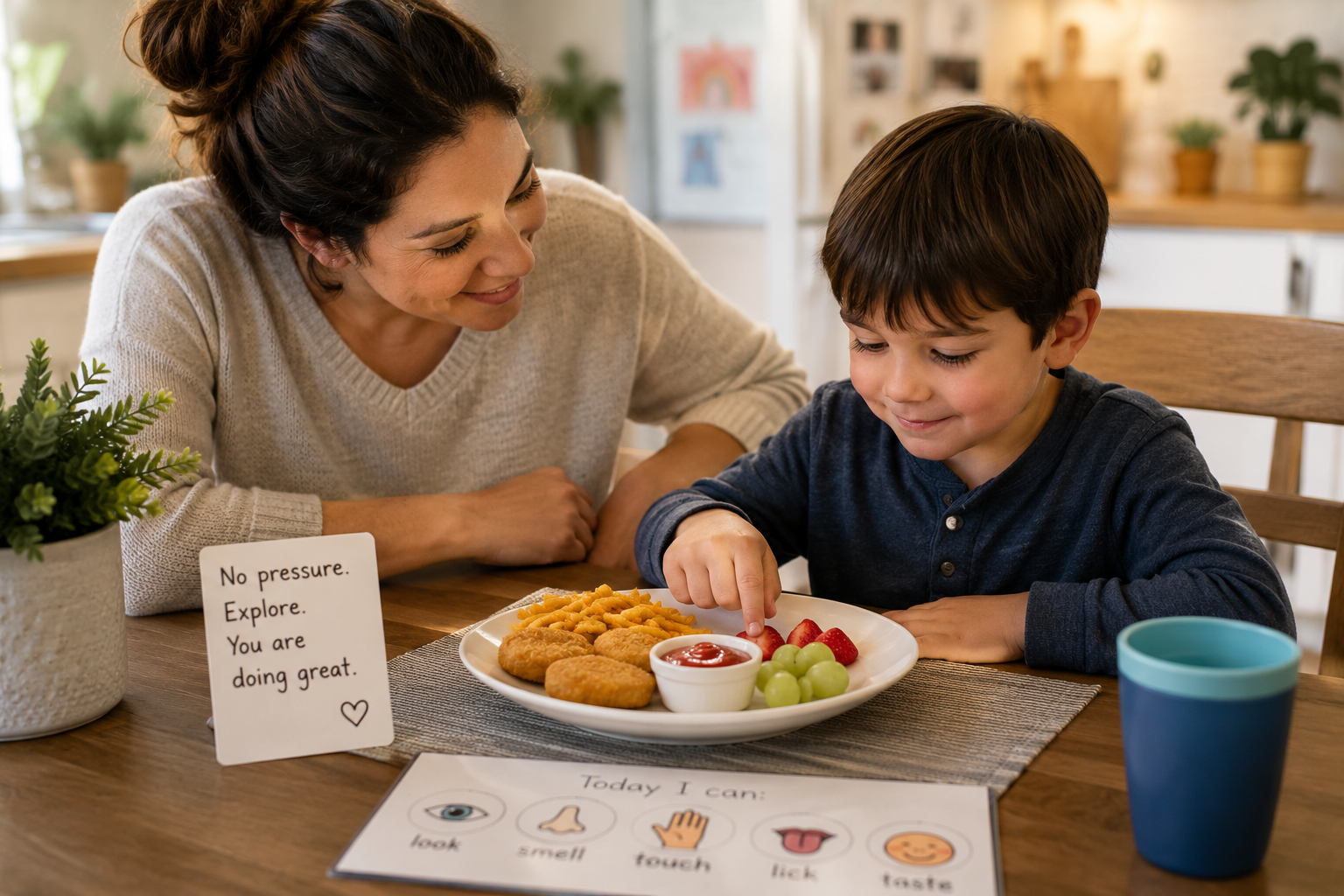
Food selectivity in autism is not simply “picky eating.” For many autistic children and adults, eating can involve strong sensory reactions, anxiety about change, physical discomfort, and real difficulty tolerating certain foods.
Autistic people may prefer foods that are predictable. A cracker, nugget, or specific brand of pasta may taste and feel the same every time. A strawberry, however, may be sweet one day and sour the next. That uncertainty can make food feel unsafe.
Why Eating Can Feel Overwhelming
Texture, Taste, Smell, and Predictability
Texture is often a major trigger. Lumps, mixed textures, slimy foods, crunchy surprises, or strong smells can cause gagging or panic.
Hunger Cues and Body Awareness
Some autistic people do not notice hunger or fullness in the usual way. They may eat very little until they are extremely hungry, or they may find fullness uncomfortable. This can make regular meals harder to manage.
GI Pain, Reflux, Constipation, and Chewing Challenges
Eating can also be physically hard. Constipation, reflux, belly pain, dental pain, allergies, or chewing and swallowing difficulties can lead to food refusal.
Why “They’ll Eat When Hungry” Can Be Harmful
For some autistic people, pressure-based advice can backfire. Removing all safe foods may increase distress, reduce trust, and in severe cases contribute to weight loss or nutritional problems.
Familiar foods and low-pressure exploration
Foods a child accepts reliably can provide a familiar starting point. Their nutritional adequacy depends on what and how much the child eats; a familiar food list alone does not establish that nutrition needs are met.
Where appropriate for your child’s feeding plan, offer a familiar accepted food alongside opportunities to explore. Looking at or serving a food can be an activity without a requirement to taste it. A feeding therapist can help decide what level of exploration is appropriate, particularly when chewing or swallowing concerns are present.
Adjust the Mealtime Environment
Bright lights, loud chewing, strong smells, uncomfortable chairs, or rushed meals can make eating harder. Try softer lighting, less background noise, predictable routines, and supportive seating.
Small changes and the SOS Approach to Feeding
A feeding therapist may help identify manageable steps based on the child’s readiness and feeding skills. The SOS Approach to Feeding considers multiple factors that affect eating and uses graded food exploration. Exploring a food does not always mean eating it immediately.
An illustrative starting activity might be using a utensil to move a new food onto a separate plate. This is an example, not a home prescription or a treatment outcome. Your therapist can adapt activities and determine whether a particular food or task is appropriate.
Learn about the SOS Approach to Feeding at Sensory Bridge.
When to Seek Professional Help
Consider help from a neurodiversity-affirming dietitian, occupational therapist, speech-language pathologist, pediatrician, or feeding team if:
-
Weight loss or poor growth occurs
-
The range of accepted foods is narrowing, or you are concerned about nutrition
-
Whole food groups are avoided
-
Eating causes panic, gagging, vomiting, or daily conflict
-
Constipation, reflux, pain, or choking concerns are present
FAQs
Is food selectivity in autism just picky eating?
No. It may involve sensory processing, anxiety, routine, GI discomfort, chewing skills, and real distress.
Should I force one bite?
Force can increase fear and reduce trust. A low-pressure approach is usually safer and more respectful.
Are safe foods bad?
No. Familiar accepted foods can be part of a supportive feeding plan. A clinician can help assess whether the overall diet meets the child’s needs.
Can autistic adults have food selectivity too?
Yes. Eating differences can continue into adolescence and adulthood, though people may develop coping strategies.
What professionals can help?
A dietitian, occupational therapist, speech-language pathologist, pediatrician, GI specialist, psychologist, or multidisciplinary feeding team may help, depending on the issue.
What is ARFID?
ARFID stands for avoidant/restrictive food intake disorder. Clinicians assess restricted intake together with consequences such as nutritional deficiency, weight or growth concerns, reliance on supplements or tube feeding, or significant interference with daily life. A food count alone cannot establish this diagnosis.
A supportive next step
Food selectivity can involve sensory experiences, predictability, distress and physical discomfort. Understanding the reasons behind a child’s difficulty helps guide appropriate support.
Coughing or choking with eating, pain, poor growth or weight loss warrants prompt discussion with your child’s healthcare provider.
Sources
- ASHA: Feeding and swallowing disorders in children
- SOS Approach to Feeding: Core principles
- NIMH: Food restriction, ARFID and recalled feeding strategies
Optional tools for trying this at home
Here are a few optional tools for trying these activities at home. You can also use what you already have. If you purchase through these links, Sensory Bridge may receive a small commission at no additional cost to you. As an Amazon Associate I earn from qualifying purchases.
- OXO Tot Training Fork & Spoon Set on Amazon (manufacturer recommends 12 months and older): For a child whose feeding plan permits it, a familiar utensil can be used to move food to a separate plate without a requirement to taste. This set is one possible choice; the size and feel need to suit your child.
Use what you have: Use a familiar utensil and separate plate you already own. Keep exploration supervised and follow your child’s feeding plan; a new utensil does not treat food selectivity.
Have questions about your child’s mealtimes? Call Sensory Bridge Pediatric Therapy at (909) 258-9292 to discuss our feeding services.