
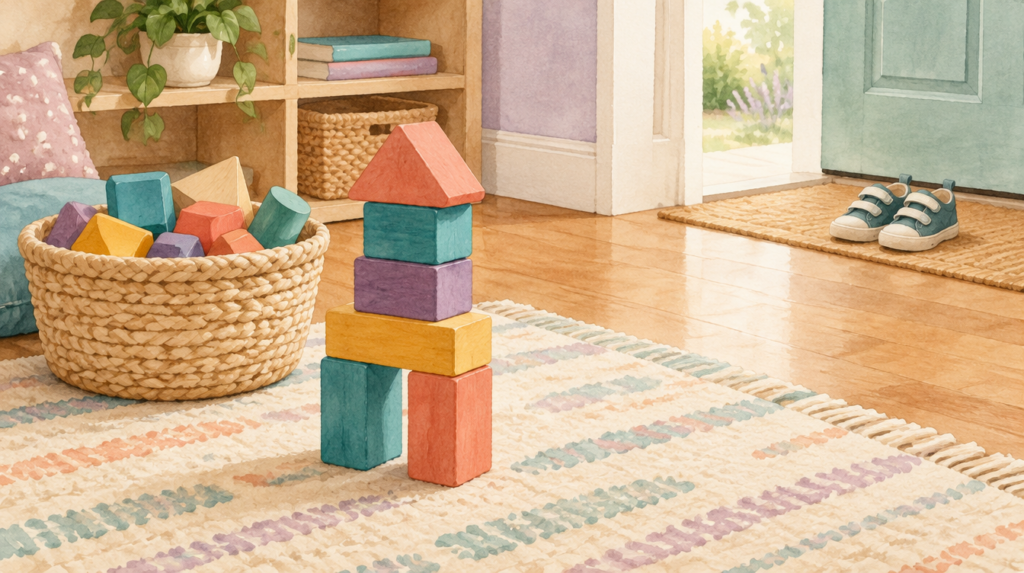
Your child is building a tower, and it is time to leave. You say, “Shoes on,” but they keep stacking. A second reminder brings tears. Suddenly, a small change in plans takes more energy than the activity itself.
Moving from one activity to another is a transition. For toddlers and preschoolers, ending enjoyable play can be difficult even when the next activity is familiar. You can keep the necessary boundary while offering support. The aim is to help your child participate in the change, with room for feelings and assistance.
1. Give play a clear ending
A predictable ending can be easier to understand than an abrupt instruction. ZERO TO THREE describes how familiar routines, songs and advance warnings can help young children anticipate changes. Read its guidance on routines and transitions.
Try naming a concrete finish: one more page, the last block, or putting the toy in its usual basket. Choose something you can follow through on. A timer is optional; if its sound adds stress, a quiet verbal cue may fit better.
Illustrative example: “Put the roof on your tower, then we will get our shoes.” Stay nearby while your child completes that small ending. If the tower can safely remain, you might leave it for later. If it must be put away, explain that before the final turn.
You do not need a new system for every activity. Start with one transition that happens often, such as finishing floor play before lunch, and use the same short sequence for a few days.
2. Offer a small role in the change
Some children need more preparation for change than others. ZERO TO THREE recommends involving the child in the transition and offering a manageable choice about how it happens. See its discussion of reactions to change.
Choose two options that both work: carrying the toy basket or helping you put in the blocks. Avoid asking whether your child wants to leave when leaving is necessary. You can offer a role without promising that it will remove every protest.
Illustrative example: When outdoor play ends, say, “We are heading home. Would you like to carry the ball or put it in the bag?” Offer help if carrying it becomes another difficult task. The choice is an invitation to participate, not a test your child must pass.
3. Connect before adding more instructions
If your child becomes upset, pause your explanation and use a calm voice. Name the feeling briefly: “You wanted to keep playing.” Stay close in a way your child welcomes, whether that means an offered hand or a little space. The American Academy of Pediatrics emphasizes calming and connecting before trying to reason with a stressed child. Read its guidance on creating calm.
Keep your words simple and maintain safety. Later, when everyone is settled, consider what made the change harder: an unexpected ending, an unfamiliar next activity, or too many tasks at once. One difficult transition does not identify a sensory condition or diagnosis.
Protect time for play, too
Play should include chances for your child to lead. The CDC’s child-led play guidance recommends safe, appropriate activities and consistent time together. When possible, choose a play period when you can give attention and are not already rushing toward the door.
If transitions regularly interfere with play, daycare or family routines, share specific examples with your pediatrician or occupational therapist. Describe the activity, the change and what support helped.
Optional tools for trying this at home
Here are a few optional tools for trying these activities at home. You can also use what you already have. If you purchase through these links, Sensory Bridge may receive a small commission at no additional cost to you. As an Amazon Associate I earn from qualifying purchases.
- Time Timer MOD, 60-minute Education Edition on Amazon: An adult can show the remaining time before a familiar transition. Use the optional alarm only if your child welcomes it; stop using the timer if it adds stress. Keep the device and battery out of young children’s reach.
- Crayola Ultra-Clean Washable Broad Line Markers, 10 count on Amazon (ages 3+): With supervision, draw a picture of play followed by shoes or lunch. Keep caps away from children who mouth objects.
Use what you have: Use a calm verbal cue, a familiar song or pictures made with supplies you already have.
To discuss your child’s participation in play and everyday transitions, call Sensory Bridge Pediatric Therapy at (909) 258-9292.