
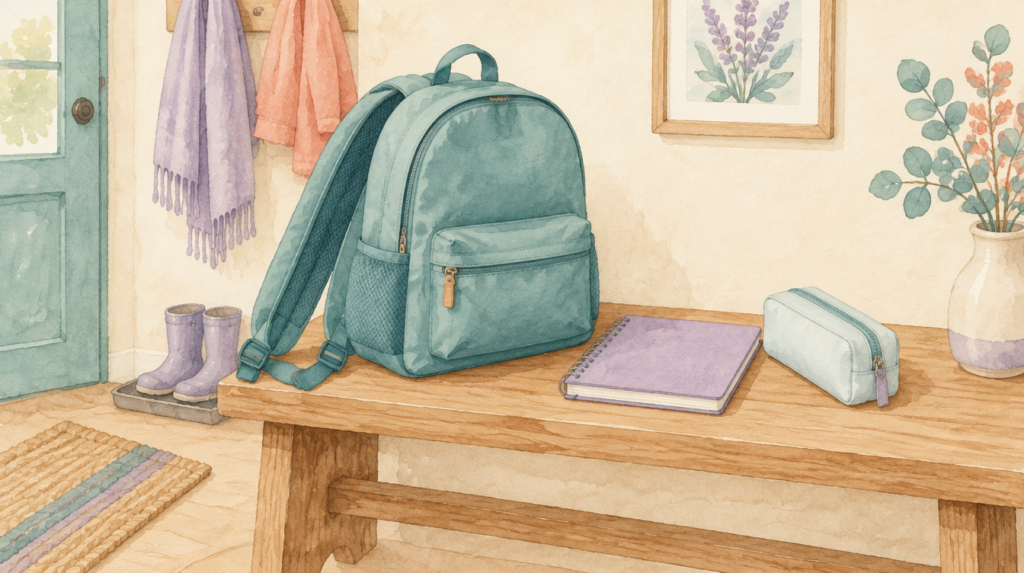
The backpack that started the school year with a folder and pencil case may now hold library books, old worksheets and a collection of “just in case” items. If your child struggles to zip it, find homework or carry it comfortably, an after-school reset is a useful place to start.
For school-age children, packing is also an everyday participation skill. You can give your child a manageable part of the job while helping with decisions that still need an adult. Try these three checks with the bag your child already uses.
1. Check what needs to travel tomorrow
Empty the backpack together on a clear surface. Ask, “What do you need for tomorrow?” rather than expecting your child to organize everything independently. Check school instructions before removing required materials.
Illustrative activity: Make three small groups: “school tomorrow,” “stays home” and “ask the teacher.” Your child might collect loose papers while you check which books must return. Choose one predictable pocket for the item that often goes missing.
The American Occupational Therapy Association recommends carrying only necessary items, placing heavier objects closest to the back and arranging contents so they do not shift around. Its backpack strategies for families also encourage choosing a bag sized for the child.
Keep the reset brief. One pocket today may be more manageable than a complete sorting project when everyone is tired.
2. Check the fit with the real school-day load
A bag can look comfortable when empty and feel different once packed. Have your child use both shoulder straps, then check whether the straps can be adjusted so the backpack sits close to the middle of the back instead of hanging low. Broad, padded straps help distribute the load.
The American Academy of Pediatrics recommends both straps and smart packing, and notes that leaning forward to carry the bag can signal that it is too heavy. Read its backpack fit and safety guidance for more detail.
Ask a concrete question such as, “Does anything dig in or pull?” Listen to your child’s answer. If the load seems difficult, review what can stay at school and ask the teacher about storage or alternatives for required materials. A new backpack is not automatically the first step.
3. Give the routine a repeatable finish
Once the bag is ready, put it in a consistent spot. Choose one responsibility your child can practice: returning the folder, checking the pencil case or placing the packed bag by the door. Offer a short cue or a simple picture checklist if that helps them remember.
Illustrative routine: After homework, say, “Folder in, pencil case in, bag by the door.” Let your child complete the parts they can, then check the remaining items together.
Nationwide Children’s Hospital recommends a weekly cleanout to remove forgotten items and unnecessary weight. Its backpack guidance offers additional packing and fit tips. A predictable weekly check can complement the shorter daily routine.
When comfort needs more attention
Backpack adjustments should not replace medical advice for persistent back, neck or shoulder pain, especially pain that continues without the bag. Discuss ongoing discomfort with your child’s pediatrician.
Optional tools for trying this at home
Here are a few optional tools for trying these activities at home. You can also use what you already have. If you purchase through these links, Sensory Bridge may receive a small commission at no additional cost to you. As an Amazon Associate I earn from qualifying purchases.
- Crayola Ultra-Clean Washable Broad Line Markers, 10 count on Amazon (ages 3+): Draw a simple packing checklist or label the “school” and “home” sorting groups together. Supervise use and keep caps away from children who mouth objects.
- Time Timer MOD, 60-minute Education Edition on Amazon: An adult can use the visual display to mark a brief evening packing period. Keep it supportive rather than making packing a race; keep the device and battery out of young children’s reach.
Use what you have: A pencil, scrap paper and your usual evening cue can do the same jobs.
If packing, organizing or managing school belongings is regularly difficult, Sensory Bridge Pediatric Therapy welcomes your questions about everyday participation. Call (909) 258-9292 to discuss getting started.